What do the UK Battery Regulations say?
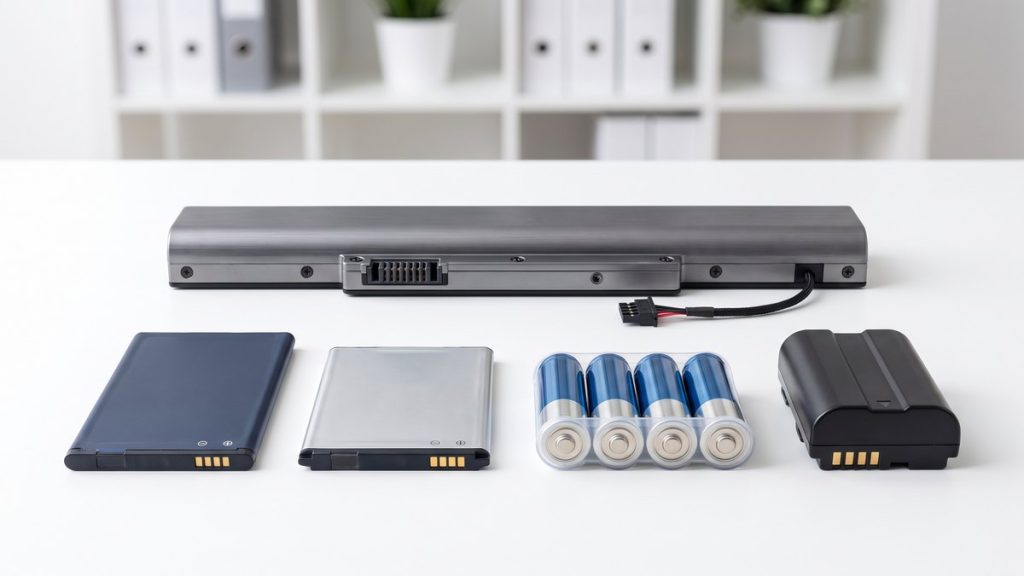
The UK Battery Regulations 2008 (as amended) transpose into UK law the obligations of the EU Battery Directive. They regulate the manufacture, placing on the market, and disposal of batteries, including portable device batteries of the type found in laptops, phones, tablets, cameras, and other consumer electronics.
Key obligations include:
- Landfill ban: All batteries are prohibited from landfill disposal under the Regulations.
- Retailer take-back: Retailers selling batteries or battery-powered devices above a threshold volume are required to accept used portable batteries free of charge for recycling, regardless of whether the customer bought the device from them.
- Producer responsibility: Battery producers are required to fund the collection and recycling of used portable batteries through compliance schemes.
Alongside the Battery Regulations, device batteries are also covered by the WEEE Regulations 2013 when they are contained within or supplied as part of an electronic device. In practice, this means device batteries must be handled through either a WEEE or battery recycling stream — never through general waste.
What types of device batteries are there?
| Battery type | Common in | Recycling route |
|---|---|---|
| Lithium-ion (Li-ion) | Phones, laptops, tablets, power banks | Retailer drop-off, HWRC, ITAD provider |
| Lithium polymer (LiPo) | Slim phones, wearables, some laptops | As above |
| Nickel-metal hydride (NiMH) | Older phones, some cameras | Retailer drop-off, HWRC |
| Nickel-cadmium (NiCd) | Older cordless tools and phones | Retailer drop-off, HWRC — cadmium is hazardous |
| Alkaline (AA/AAA) | Wireless keyboards, mice, remotes | Retailer drop-off, HWRC |
The batteries most commonly encountered in IT asset disposal are lithium-ion and lithium polymer, found in laptops, smartphones, and tablets.
Why lithium-ion batteries need careful handling
Lithium-ion batteries are energy-dense and chemically reactive. A damaged, punctured, or short-circuited lithium cell can enter a condition called thermal runaway — generating heat rapidly, which can lead to fire or explosion. This is why:
- Batteries must not be placed in general waste or recycling bins (many waste fires at recycling facilities are caused by lithium batteries in the waste stream).
- Damaged or swollen batteries should not be transported with other items — store them in a fire-resistant container and inform your recycler before collection.
- Batteries should not be incinerated or crushed.
If you discover a swollen or leaking battery in a device, do not attempt to remove it without specific guidance. Contact your ITAD provider or the device manufacturer for safe handling advice.
How to recycle device batteries: your options
Keep them with the device
The simplest approach is to pass the device to a certified WEEE recycler with the battery still installed. The recycler will safely remove and process the battery as part of their WEEE handling procedure. Recycle4Charity handles batteries in this way when collecting devices from London businesses through our WEEE recycling service.
Drop off at a retailer
Under the UK Battery Regulations, retailers of batteries and battery-powered devices are required to accept used portable batteries for recycling. Most large supermarkets, DIY stores, and electrical retailers have battery collection boxes near the entrance. This is the most convenient route for individuals and small quantities.
Drop off at a council HWRC
All London borough HWRCs accept batteries for recycling, including device batteries. Check your borough council’s website for your nearest site.
Through a certified ITAD provider
For businesses disposing of a fleet of devices, a certified ITAD provider will handle batteries as part of the collection. This is covered under the Waste Transfer Note for the overall collection. Ask your provider to confirm that batteries are processed through a licensed battery recycling stream.
What about removable versus non-removable batteries?
Many modern smartphones and some laptops have non-removable batteries — they are glued or screwed into the device and cannot be easily separated by the user. In this case, do not attempt to remove the battery yourself. Pass the device to a certified recycler; they have the tools and training to safely extract and process the battery.
For devices with easily removable batteries (many older phones, some laptops), you can remove the battery and recycle it separately or together with the device.
Batteries from bulk device disposals
When a business disposes of a large number of devices — a mobile phone refresh, a laptop estate update — the aggregate weight and energy of batteries in those devices is significant. Certified ITAD providers log batteries separately in their recycling records to comply with reporting requirements under the UK Battery Regulations. Ask your provider to confirm this is part of their standard process.
For more on how bulk device disposal works for businesses, see our guide to how to dispose of IT equipment.
What happens to recycled device batteries?
Licensed battery recyclers process lithium-ion batteries through a specialised hydrometallurgical or pyrometallurgical process:
- Batteries are discharged to a safe energy level.
- They are shredded or dismantled in controlled conditions.
- The resulting material — known as “black mass” — is processed chemically to recover lithium, cobalt, nickel, and manganese.
- Recovered metals re-enter the battery supply chain, reducing reliance on primary mining.
Recovering these materials is increasingly important as demand for battery materials grows and primary sources face supply pressure. Battery recycling infrastructure in the UK is expanding as a result.
Ready to dispose of your business devices and their batteries?
Recycle4Charity collects devices from London businesses, handling battery disposal safely and in compliance with UK Battery Regulations and WEEE Regulations. Visit our WEEE recycling page to book a collection.