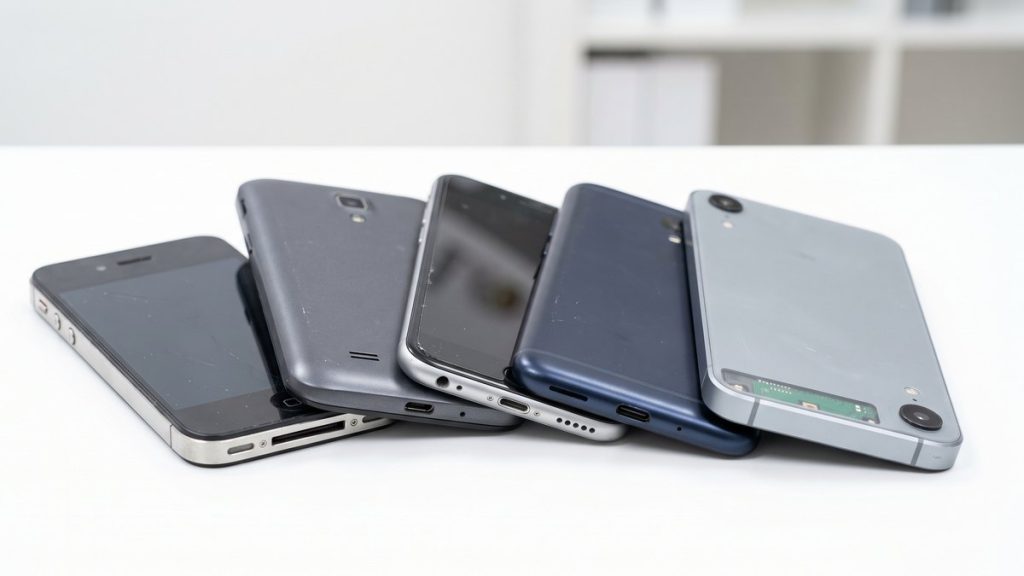
Why phone disposal needs care
Mobile phones pack a significant amount of sensitive information into a small device. Contacts, messages, email accounts, banking apps, two-factor authentication codes, photos, and browsing history are all stored locally, even when cloud sync is enabled. For businesses, work phones may also hold corporate email, VPN credentials, and access to internal applications.
Under UK GDPR and the Data Protection Act 2018, organisations that process personal data on mobile devices must ensure that data is destroyed before the device leaves their control. The Information Commissioner’s Office (ICO) has published guidance on secure disposal of mobile devices, noting that a standard factory reset may not be sufficient depending on the device’s operating system and encryption state.
Beyond data security, phones also contain materials that make careless disposal harmful: lithium-ion batteries, rare earth metals, lead solder, and small quantities of other hazardous substances. These must be handled within licensed WEEE and battery waste streams.
Step-by-step: how to recycle a phone
1. Back up any data you need
Transfer contacts, photos, messages, and app data to a new device or secure cloud backup. Confirm the backup has completed before wiping.
2. Sign out of all accounts
This is essential — particularly for iPhones, where Activation Lock can prevent a device being reused if the Apple ID is not removed. On Android, remove the Google account to clear factory-reset protection. Sign out of banking, email, and work applications individually.
3. Remove the SIM card
The SIM stores contacts and is linked to your phone number and network account. Remove it and retain it, transfer it to your new device, or arrange for it to be destroyed. Do not leave a SIM in a phone being passed to a recycler.
4. Remove the memory (SD) card if present
SD cards in Android devices may hold photos, documents, and downloaded files. Remove and retain, transfer, or destroy separately.
5. Perform a factory reset
On most modern smartphones, a factory reset combined with full-disk encryption (which is enabled by default on iOS and most recent Android devices) provides an adequate level of data protection for standard business requirements. For devices containing highly sensitive data, certified software erasure or physical destruction of the device is preferable.
6. Request certified erasure if required
Businesses with formal data destruction requirements should use a certified ITAD provider that issues erasure certificates naming each device by IMEI number. This provides auditable proof of destruction.
7. Pass the device to a certified recycler
Businesses must use an authorised WEEE treatment facility and obtain a Waste Transfer Note. Recycle4Charity provides free collection for London businesses and donates working handsets to digitally-excluded individuals and community organisations. Our mobile device recycling service covers all London boroughs.
Can a phone be donated instead of recycled?
Yes — and this is strongly preferable where the device is functional. Refurbishing and donating a smartphone avoids the significant environmental cost of producing a new one; manufacturing a single smartphone consumes substantial quantities of water, energy, and rare materials. Reuse is the first step in the waste hierarchy established in UK law.
As with recycling, data must be wiped before donation. Do not assume the recipient organisation will handle this.
What about business mobile fleets?
Organisations refreshing large numbers of handsets should treat mobile disposal as a formal IT asset disposal process rather than an informal hand-back. Each device should be documented (make, model, IMEI), wiped to a consistent standard, and covered by a destruction certificate. Aggregating disposals into a single certified collection reduces administrative overhead and ensures consistent documentation.
Phones, tablets, and the WEEE categories
Mobile phones fall under WEEE Category 2 (small IT and telecommunications equipment). Tablets are treated similarly and follow the same disposal rules. If you are disposing of both at the same time, a single ITAD collection can cover both device types. See our guide on how to recycle a tablet for more detail.
Options compared
| Route | Data wiped? | WEEE compliant | Documentation | Suitable for businesses? |
|---|---|---|---|---|
| Certified ITAD provider | Yes (certificate issued) | Yes | Waste Transfer Note + IMEI cert | Yes |
| Network operator trade-in | Sometimes | Yes | Variable | Sometimes |
| Charity refurbishment | Usually | Yes | Variable | Yes (with care) |
| Council HWRC | No | Yes | No | No (household only) |
| General waste | No | No — illegal | None | No |
Ready to recycle your business phones?
Recycle4Charity collects mobile devices from London businesses, provides certified data erasure by IMEI, and donates working handsets to people who need them. Visit our mobile device recycling page to book a free collection.